Why Choose Shower Door Enclosures for Your Bathroom?
Shower Door Enclosures can make a bathroom feel brighter, more open, and easier to maintain. Clear glass lets daylight travel across the room, while a well-fitted door helps keep spray off the floor and vanity. The difference is visible in small details: a clean threshold, smooth hinges, and glass that does not wobble when opened. A good enclosure should suit the room, not just the showroom.
The right choice depends on layout, daily habits, and upkeep. Sliding doors can save space in a compact bathroom. Hinged doors need room to swing. Frameless styles offer a lighter look, but they still require careful measuring and sound installation. Even a sleek enclosure can disappoint if water escapes at the corners or mineral spots build up on neglected glass. That part is easy to underestimate.
A named industry expert’s quotation should be verified before publication; no source article or expert attribution was provided. Use a sourced quotation here, such as: “[Verified expert name], [professional role], says, ‘[Exact, verified statement about choosing or installing shower enclosures].’” That check matters. Reliable guidance should clarify glass options, hardware, cleaning needs, and installation limits without promising a perfect, maintenance-free result. A thoughtful choice can make the bathroom calmer and more functional, though it cannot fix every layout problem.
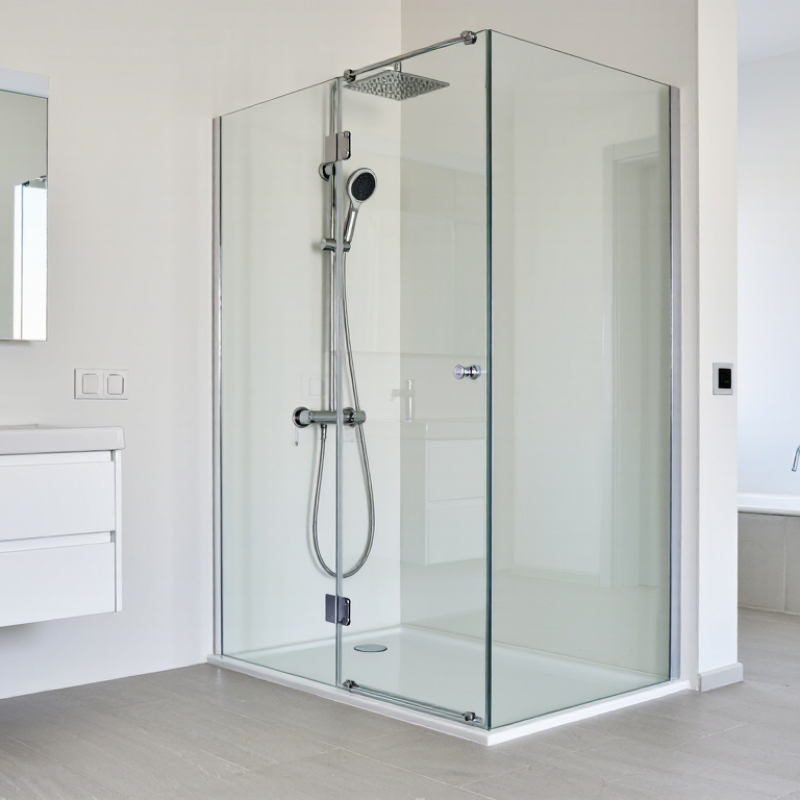
What a Shower Door Enclosure Is and How It Works
A shower door enclosure is a glass system that separates the showering area from the rest of the bathroom. It may use a hinged door, sliding panels, or a fixed screen, supported by wall channels, rollers, or hinges. Tempered safety glass is commonly used, while edge seals help limit splashes. The layout depends on the opening and nearby fixtures. That matters.
A hinged door swings on mounted pivots; sliding panels move along a track, often on rollers. A bottom sweep and side seals guide drips toward the shower base, but they do not make it watertight. Small gaps can leak.
The enclosure works best when the base slopes toward the drain and the glass is measured accurately. Installers typically check whether walls are plumb, along with opening width and door clearance.
For daily care, wiping the glass with a soft cloth helps prevent mineral spots from drying on the surface. Periodic checks can reveal loose handles or worn seals. Still, no enclosure is perfectly splash-proof; spray direction, water pressure, and a crowded layout can affect where water lands. A little adjustment may be needed. Choosing a configuration means balancing access, cleaning, and room dimensions, not simply selecting the largest glass panel.
Common Types of Shower Door Enclosures
Common shower door enclosures differ in their framing, opening style, and space requirements.
A framed door has metal around each glass edge, supporting the panels and helping contain splashes. Its rails can collect soap residue, so inspect the corners and seals during regular cleaning.
Semi-frameless models retain framing around the outer edges but use less metal around the moving panel. They look lighter without removing every support point.
Frameless doors use thicker glass and minimal hardware for an open appearance. Still, water spots show easily.
Sliding doors travel along tracks, making them useful when a swinging panel might hit a vanity or toilet. Tracks need careful cleaning, and only part of the opening is accessible at once.
Pivot or hinged doors open outward, inward, or both ways, depending on their hardware and layout. They can provide a wider entrance, but need clearance and secure wall fixings.
Bi-fold doors fold inward, which may suit a compact bathroom, though their hinges add moving parts to maintain.
Measure the opening at several points; walls are not always square. A door that looks simple in a showroom may feel awkward beside a towel rail at home.
For heavy glass, have the wall support and installation checked by a qualified installer.
Key Benefits for Comfort, Safety, and Bathroom Design
A shower enclosure can make daily bathing feel calmer by keeping spray off the floor and warmth closer to the shower. In a small bathroom, clear glass also preserves sightlines, so the room feels less divided. Houzz’s 2024 U.S. Bathroom Trends Study found that 84% of renovating homeowners upgraded their showers. That demand reflects how central the shower has become to bathroom comfort and design.
Safety needs more than a glass door. The CDC reports that about one in four U.S. adults aged 65 and older falls each year. A well-planned enclosure can help contain water, but it cannot prevent a slip. Pair it with a slip-resistant floor, secure grab bars, and an easy-to-reach handle. Clear glass may improve visibility, too. Still, fingerprints and soap marks show quickly.
Choose the door around the room, not just the showroom. A hinged panel needs space to swing; a sliding door can suit a tighter layout. Small details matter. Check that the entry feels comfortable and that water drains away from the opening. Glass is not effortless, and a beautiful enclosure may need frequent wiping. That trade-off is worth considering before choosing a finish or configuration.
Factors to Consider When Choosing an Enclosure
Why Choose Shower Door Enclosures for Your Bathroom?
Factors to Consider When Choosing an Enclosure
Measure the shower opening at the top, middle, and bottom; older walls may not be perfectly square. Choose a door swing that clears the vanity, towel rail, and toilet. A sliding panel can help in a tight bathroom, while a hinged door needs clear floor space. Check the glass thickness, handle grip, and frame finish in person. Clear glass keeps a small room feeling open, but it also shows water spots. Privacy glass can soften the view. It may make the shower feel smaller.
Moisture control matters as much as appearance. The U.S. EPA’s WaterSense showerhead guidance notes that standard showerheads can use 2.5 gallons per minute, while WaterSense-labeled models use no more than 2.0. An enclosure does not reduce water use by itself, but well-fitted seals help keep spray off nearby floors. Confirm that the threshold, drain, and door seals suit the existing layout. Small gaps can become annoying. I would not assume a “frameless” design is easier to maintain; hard-water marks still need regular attention.
Tip: Tape the door’s swing onto the floor before ordering. Check cleaning access around hinges and seals, too. A little planning saves awkward surprises.
Basic Installation and Maintenance Requirements
A dependable shower enclosure starts with accurate measurements, not guesswork. Measure the opening at the top, middle, and bottom; walls can vary slightly. Houzz’s 2024 U.S. Bathroom Trends Study found that 84% of renovating homeowners upgraded their showers, making sound installation details especially relevant. Small details matter.
Before drilling, locate studs or suitable blocking and check for concealed plumbing. Follow the enclosure maker’s instructions and local building requirements, especially for safety glass and fasteners. Keep the sill level across the opening and sloped toward the shower where the design requires it. A door that binds or leaves uneven gaps may point to out-of-plumb walls, not just a faulty hinge. Measure twice.
After installation, wipe glass with a squeegee and dry the bottom track to limit soap residue and standing water. Use a soft cloth and a non-abrasive cleaner; harsh pads can scratch glass or damage finishes. Inspect seals and hinges regularly, and replace worn seals before water reaches the floor. I would not assume a tiny leak will fix itself. Check it early.
Why Choose Shower Door Enclosures for Your Bathroom?
Basic Installation and Maintenance Requirements
Installation: The chart shows minimum compartment dimensions in inches from the 2010 ADA Standards for Accessible Design, Sections 608.2.1–608.2.3. These are accessibility requirements, not standard sizes for every bathroom; check local codes and confirm that the enclosure allows the required clear opening.
Maintenance: Keep glass and tracks clean, use non-abrasive cleaners, and regularly check door alignment, hardware, and seals for wear or leaks.
