
Top Biological Water Treatment Suppliers in China
Biological Water Treatment is central to reliable wastewater management, but supplier selection depends on more than equipment lists. UN-Water’s Progress on Wastewater Treatment: 2024 Update reports that 42% of household wastewater worldwide was not safely treated in 2022—about 113 billion cubic metres. That gap matters. It highlights the need for systems that perform under real operating conditions, not just on paper.
China’s wastewater sector is large and varied. The Ministry of Housing and Urban-Rural Development publishes annual urban construction statistics covering wastewater infrastructure and treatment capacity. These records offer useful context, but national figures cannot tell buyers how a particular plant will perform. Influent quality, seasonal temperature changes, land limits, energy costs, and operator skills all affect results. A treatment line suited to a coastal industrial park may not fit a small inland municipality.
This overview of top biological water treatment suppliers in China focuses on practical capabilities: activated-sludge and biofilm processes, membrane bioreactors, process design, controls, and after-sales support. It also considers whether suppliers can provide credible project references and explain performance assumptions. No supplier is best for every site. Brochures can be polished; pilot data and clear operating records are harder to replace. Any comparison has limits, so buyers should verify claims against their own wastewater samples and discharge requirements.
Biological Water Treatment and Its Role in China
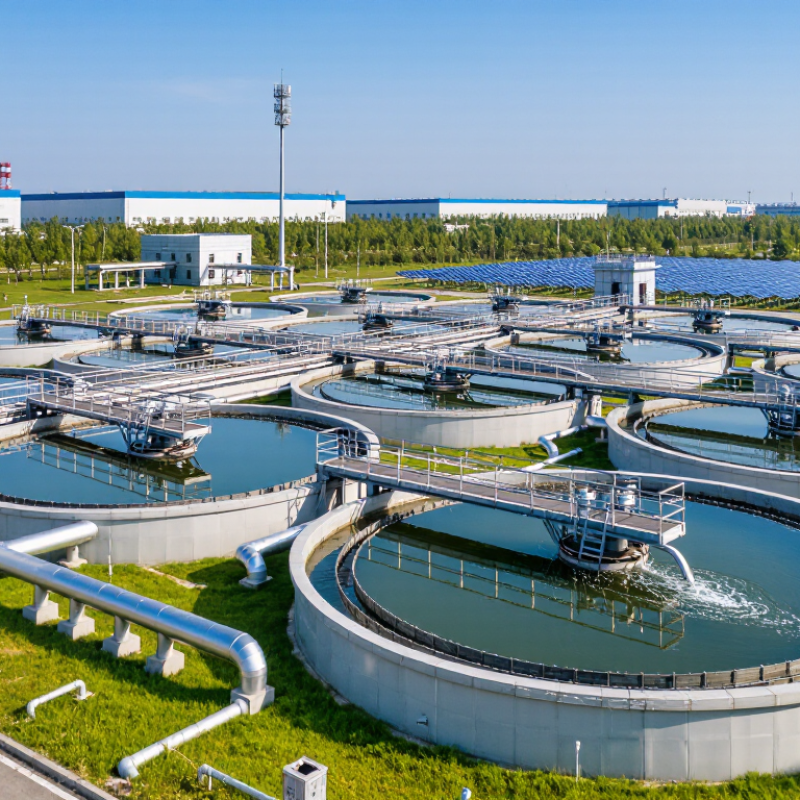
In China, biological water treatment helps remove biodegradable pollutants from municipal wastewater and many industrial streams. It uses microorganisms to consume organic matter, often in aeration tanks or attached-growth systems. At a treatment plant, operators may check dissolved oxygen, sludge condition, and water clarity during each shift. A sudden change in factory discharge can upset the process. Small changes matter.
The method supports cleaner effluent and can reduce the load on later treatment stages. Its performance depends on steady operation, suitable oxygen levels, and a microbial community adapted to the wastewater. In colder weather, biological activity may slow, so operators need to review process data rather than rely on a fixed routine. Suppliers can contribute equipment and technical support, but plant teams still need to verify performance through sampling and maintenance. Biology is not a quick fix. It also does not remove every contaminant, so additional treatment may be needed to meet a site’s discharge requirements. There is room for improvement: monitoring can be uneven, and operators sometimes have limited time to investigate gradual process changes.
Top Biological Water Treatment Suppliers in China - Biological Water Treatment and Its Role in China
| Solution or Supplier Capability | How the Biological Process Works | Typical Applications | Role in Water Treatment | Key Design and Operation Considerations |
|---|---|---|---|---|
| Conventional activated-sludge systems | Aerobic microorganisms consume biodegradable organic matter in aeration tanks; biomass is separated from treated water in a secondary clarifier. | Municipal wastewater and suitable biodegradable industrial wastewater. | Reduces biochemical oxygen demand (BOD) and suspended biological solids; configurations with suitable anoxic and anaerobic zones can also support nitrogen and phosphorus removal. | Requires reliable aeration, sludge-return control, settling performance, and management of variations in flow and influent composition. |
| Sequencing batch reactors (SBR) | Biological treatment and clarification take place in the same tank in timed fill, react, settle, decant, and idle stages. | Municipal plants and small or decentralized facilities where batch operation is practical. | Treats biodegradable organics and can be operated to remove nitrogen and phosphorus through controlled aerobic and anoxic conditions. | Cycle timing, equalization, decanting, and controls must match the incoming flow pattern and required effluent quality. |
| Moving bed biofilm reactors (MBBR) | Microorganisms grow as a biofilm on freely moving plastic carriers retained within the reactor by screens. | Plant upgrades, compact treatment systems, and wastewater with biodegradable organic matter or ammonia. | Provides attached-growth biological treatment and can increase biomass capacity within an existing tank footprint. | Carrier retention, mixing, aeration, screening, and downstream solids separation need to be designed together. |
| Membrane bioreactors (MBR) | Biological treatment is combined with membrane filtration to separate treated water from suspended biomass. | Sites with limited space or applications requiring low suspended-solids effluent for further treatment or reuse. | Combines organic-matter removal with fine solids separation; it does not by itself remove all dissolved salts or trace contaminants. | Membrane fouling control, cleaning, energy use, sludge management, and appropriate downstream disinfection should be considered. |
| Anaerobic treatment systems | Microorganisms degrade organic matter in the absence of oxygen; some reactor designs capture biogas produced during treatment. | High-strength, readily biodegradable wastewater, including selected food-processing and fermentation streams. | Can reduce organic loading before aerobic polishing and may recover biogas when the wastewater and system are suitable. | Temperature, pH, toxicity, start-up, gas safety, and the need for post-treatment affect performance and feasibility. |
| Biological nutrient-removal systems | Process zones and operating conditions are arranged to support nitrification, denitrification, and, where designed, biological phosphorus removal. | Municipal wastewater and industrial wastewater where nitrogen or phosphorus limits apply. | Targets nitrogen and phosphorus in addition to biodegradable organic matter, helping control nutrient discharge to receiving waters. | Carbon availability, dissolved oxygen, internal recycle, temperature, and influent variability influence nutrient-removal performance. |
| Engineering, controls, and commissioning support | Services may include process selection, pilot testing, equipment integration, instrumentation, start-up, and operator training. | New installations, expansions, retrofits, and facilities with changing influent or discharge requirements. | Connects biological process design with site conditions, effluent targets, and ongoing plant operation. | Evaluate project references, influent testing, process guarantees, lifecycle costs, local service capacity, and compliance documentation. |
Note: Process suitability and performance depend on wastewater characteristics, site conditions, design, and operation. In China, applicable discharge requirements should be confirmed for the project; relevant national standards include GB 18918-2002 for municipal wastewater treatment plant pollutant discharge and GB 8978-1996 for integrated wastewater discharge.