What Is a Foam Filled Mooring Buoy Used For?

A Foam-Filled Mooring Buoy provides a floating connection point for vessels, mooring lines, or anchored equipment. It helps keep a line visible and accessible at the water’s surface, making it easier for a crew to approach and secure a boat without tying directly to a fixed dock. In a quiet harbor, the buoy may mark a single mooring position; in more exposed water, its role depends on the full mooring system and local conditions.

The foam inside supplies buoyancy without relying solely on an air-filled chamber. Depending on its design and materials, it may retain some flotation if the outer shell is damaged, but that should never be assumed without checking product specifications. Look closely at buoy size, rated working load, attachment hardware, water depth, and expected wave or current forces. A buoy that looks substantial beside a small boat can still be unsuitable for a larger vessel. Details matter.

This guide explains how these buoys function, where they are commonly used, and what to assess before choosing one. It also considers routine checks, such as inspecting the shell, connectors, and mooring line for wear or corrosion. Small defects can grow. A buoy is only one part of a dependable setup, and its performance depends on correct installation and regular inspection. Even experienced operators can overlook changing conditions, so selection deserves a second look.
What Is a Foam Filled Mooring Buoy Used For?

What a Foam-Filled Mooring Buoy Is

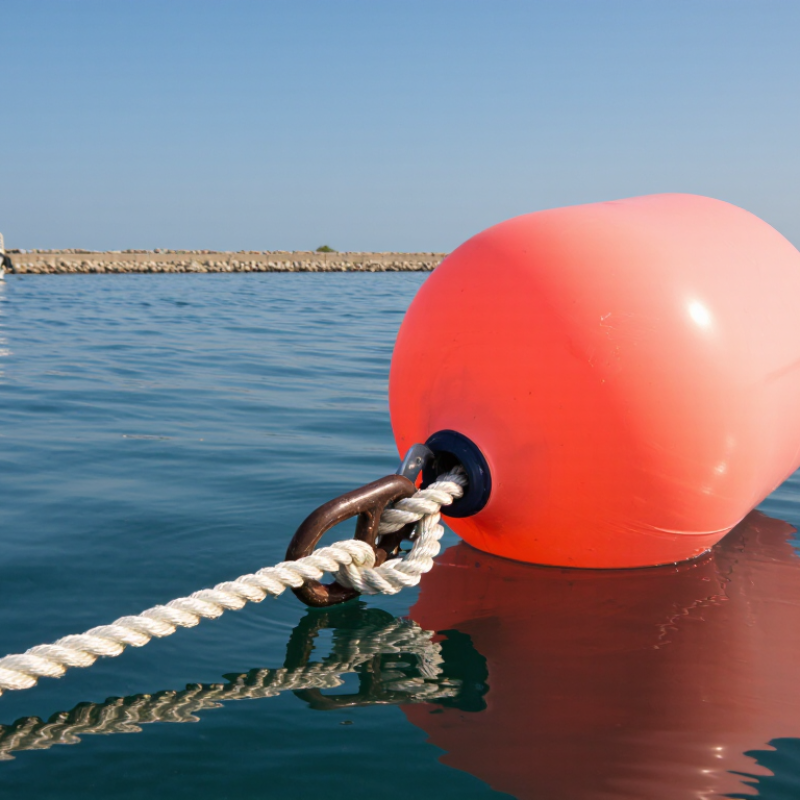
A foam-filled Mooring Buoy is a floating body with a buoyant foam core enclosed by a protective outer shell. The foam helps it stay afloat if the shell is punctured, unlike a hollow buoy that may take on water. Its shape, lifting eye, and attachment hardware provide a visible connection point for a mooring line or chain. Some models also mark a berth or help keep part of a mooring line near the water’s surface.

The buoy supports and identifies the mooring connection; it does not anchor a vessel by itself. The seabed anchor, chain, line, and buoy must be selected to suit the vessel, water depth, and local conditions. Check the buoy’s rated load and inspect its shell, eye, and fittings for wear or deformation. Small cracks matter. Foam filling can reduce the risk of sinking after damage, but it does not make a buoy indestructible or suitable for every load. And “foam-filled” alone says little about service life; construction and maintenance still matter.

What Is a Foam-Filled Mooring Buoy Used For?

A foam-filled mooring buoy provides flotation for mooring lines and helps mark a mooring point. Its closed-cell foam core helps it remain buoyant if the outer shell is damaged.

The chart compares theoretical gross buoyancy for ideal spherical buoys. Values are calculated from sphere volume using seawater density of 1,025 kg/m³ and shown as tonnes of displaced seawater. Actual usable buoyancy is lower because buoy weight, mooring loads, and safety margins must be considered.

How Its Buoyancy and Mooring System Work

A foam-filled mooring buoy provides the upward force that keeps a mooring connection accessible at the water’s surface. Its sealed shell contains closed-cell foam, which limits water uptake if the outer skin is damaged. The buoy connects to a chain or synthetic line leading to an anchor, pile, or other fixed point. A vessel’s mooring line then attaches to the buoy’s upper fitting.

The buoy is not an anchor; it helps support and position the connection while the seabed fixture resists the load.

Buoyancy depends on displaced water volume, minus the buoy’s own weight and attached hardware. Using seawater density of about 1,025 kg/m³, a 0.5 m³ buoy displaces roughly 512 kg of seawater before those deductions.

This is a basic estimate, not a working-load rating. NOAA’s World Ocean Atlas 2023 documents the temperature and salinity variations that affect seawater properties, so local conditions matter.

Mooring loads also change with vessel movement, wind, waves, and line angle. The line must transfer those forces without pulling the buoy underwater or overloading its fittings. That reserve matters.

Foam can hide damage. Inspection should include the shell, lifting points, connectors, and line wear; honestly, the foam alone cannot confirm the system is safe.

Where Foam-Filled Mooring Buoys Are Used

What Is a Foam Filled Mooring Buoy Used For?

Where Foam-Filled Mooring Buoys Are Used

Foam-filled mooring buoys are used wherever vessels need a visible, stable point to attach a mooring line. In marinas, they can mark individual berths away from crowded docks. A boat can lie to the buoy while keeping its hull clear of pilings. That small clearance matters when wakes push through the harbor.

They are also used at aquaculture sites, near working waterfronts, and around sheltered coastal moorings. At fish farms, buoys can support or identify parts of floating systems, depending on their design and rating. Work crews may use them to mark temporary mooring positions for service vessels. Not every buoy fits every site. Wave exposure, water depth, vessel size, and line loads all affect the choice.

The foam core helps the buoy retain flotation if its outer shell is damaged, but fittings still need regular inspection. Look for cracks, worn connection points, and waterlogged lines. It is easy to focus on buoy size and overlook the hardware. That can be a costly mistake. Check that the buoy and its attachments are rated for expected loads, and position it where crews can see and approach it safely.

How They Secure Vessels and Offshore Equipment

A foam-filled mooring buoy provides a floating attachment point between a vessel and its mooring system. Heavy-duty lines connect the buoy to an anchor or seabed fixture, helping hold a vessel or offshore unit in position. At the surface, the buoy keeps the connection accessible for crew and support vessels. Its closed-cell foam core can help retain buoyancy if the outer shell is damaged, though it does not make the buoy damage-proof. That matters offshore.

The buoy also helps keep lines clear of the water and reduces repeated handling of submerged connections. Engineers select its size, fittings, and rated loads for local waves, currents, water depth, and vessel movement. A visible buoy is not proof of adequate capacity. OCIMF’s Mooring Equipment Guidelines and API RP 2SK provide engineering guidance for mooring equipment and systems; actual limits must come from the design and inspection records. The scale of offshore activity makes this practical detail important: the Global Wind Energy Council’s Global Wind Report 2024 recorded 75.2 GW of installed offshore wind capacity worldwide by the end of 2023. That figure describes the industry, not buoy demand. And that distinction is easy to miss. A tidy drawing can hide real wear, changing sea conditions, or a poorly matched connection.

What Is a Foam Filled Mooring Buoy Used For? — How They Secure Vessels and Offshore Equipment

Use or Mooring Situation How the Buoy Helps Typical Arrangement Key Selection Considerations
Vessel mooring Provides buoyancy at the water surface for a mooring connection, helping keep the pickup point accessible and supporting part of the mooring system. A vessel connects a mooring line or hawser to buoy lifting or connection hardware; the buoy is connected to the seabed mooring system. Vessel size, expected environmental loads, water depth, line geometry, connection design, and required reserve buoyancy.
Offshore equipment mooring Supports buoyant components in a mooring arrangement for equipment such as floating work platforms or temporary offshore installations. One or more buoys are incorporated into a designed system of lines, anchors, and surface connections. Equipment weight and movement, current and wave conditions, anchor capacity, line loads, and the buoy’s certified structural rating.
Hawser or mooring-line support Helps keep a connection point or section of line at the surface, making it easier for a vessel or work crew to locate and retrieve. The buoy is attached to a specified line or retrieval arrangement using compatible, load-rated hardware. Line weight, submerged line length, retrieval loads, attachment-point strength, visibility, and abrasion protection.
Temporary mooring and marine operations Marks and supports a temporary mooring point during activities such as vessel servicing, construction, or offshore operations. The buoy is deployed with the project’s engineered anchor and line arrangement and recovered when the operation is complete. Deployment duration, changing sea conditions, site depth, inspection access, and safe recovery procedures.
Why use a foam-filled buoy? A closed-cell foam core can help the buoy retain buoyancy if its outer skin is damaged, unlike a buoy that relies only on an air-filled cavity. Common construction uses a tough outer elastomeric skin around a buoyant foam core; construction varies by design. Check the specified buoyancy, outer-skin durability, resistance to impact and marine exposure, maintenance needs, and applicable test documentation.
Buoyancy and load planning Provides buoyant force, but does not by itself anchor a vessel or establish the safe working load of the complete mooring system. System design accounts for the buoy, connected lines, anchors, vessel or equipment, water depth, and environmental forces. Net buoyancy depends on displaced seawater weight minus the buoy’s weight. Allow for submergence and suitable reserve buoyancy; verify structural and line loads separately.

Design note: Buoy size, buoyancy, and connection ratings are project-specific. The complete mooring system should be selected and checked for the site’s water depth, loads, and environmental conditions.

Key Factors in Selecting and Maintaining a Buoy

A foam-filled mooring buoy helps keep a vessel secured at a designated point while providing visible flotation on the water. Its foam core can preserve some buoyancy if the outer shell is damaged, depending on the buoy’s design and condition. That makes careful selection important.

Start with the vessel’s size, expected mooring loads, water depth, and local wave exposure. Match the buoy’s rated capacity to the full load, including wind and current—not just the vessel’s weight. Consider its diameter, attachment points, and compatibility with the chain or rope; undersized fittings can wear quickly. Bright colors improve visibility, especially in low light. Small details matter. A supplier or marine technician can help confirm the working load and suitable configuration.

Maintenance begins with regular visual checks. Rinse off salt and grit, then look for cuts, worn seams, fading, or exposed foam. Inspect shackles, rings, and connecting lines for corrosion, distortion, or chafing. Check more often after storms or heavy use. Replace damaged hardware rather than relying on a quick fix. A simple inspection log helps reveal gradual wear, though it can be easy to skip when the buoy still looks sound. That assumption deserves a second look.