Finding great windows in China requires more than comparing catalogue prices. Buyers need to check performance data, production consistency, and how clearly a supplier answers technical questions. A polished sample is useful. It is not proof of a reliable production run.
The stakes are practical. The International Energy Agency’s Energy Efficiency 2023 report says buildings accounted for about 30% of global final energy consumption in 2022. Window selection can affect heat loss, glare, indoor comfort, and cooling demand. Dr. Stephen Selkowitz, a longtime building-technology researcher at Lawrence Berkeley National Laboratory, has emphasized that “windows are a critical part of the building envelope.” That principle matters when comparing frame materials, glazing, seals, and hardware—not just appearance.
Look for test reports tied to the exact product configuration, including glass build-up and frame series. Ask who performed the tests, when they were conducted, and whether the factory can match those specifications in repeat orders. Then inspect corner joints, drainage paths, gasket contact, and operating hardware on a physical sample. Small details count. A certificate alone cannot show how a unit will arrive, fit, or perform on a specific project. It is easy to overlook that.
China offers a broad supplier base, but “great windows” are not defined by country of origin or low price. They emerge from verifiable specifications, careful sampling, clear communication, and installation planning. Buyers should also leave room for uncertainty: shipping conditions, site measurements, and local climate can expose weaknesses that a showroom never reveals.
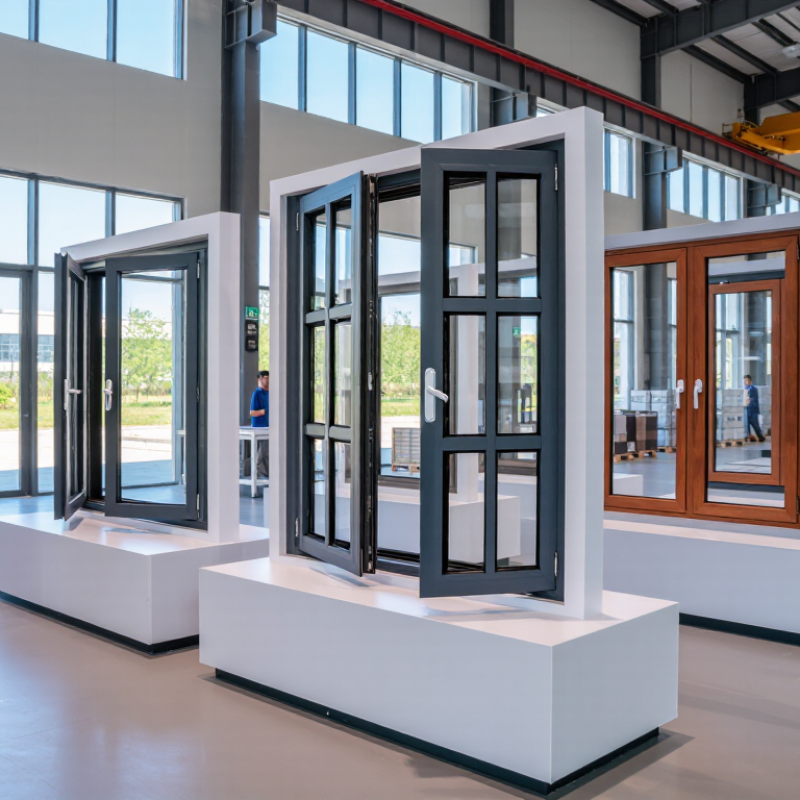
For global buyers, GB/T 8478-2020 is a practical reference for Chinese aluminium-alloy windows and doors. It covers product requirements and test methods, not every frame material. Timber, PVC, and steel products need other applicable references. Check the declared opening style, frame dimensions, alloy and temper, surface finish, glazing build-up, hardware, and drainage details. Small details matter. A wide sliding sash and a narrow casement can respond differently to wind pressure.
The International Energy Agency’s Tracking Buildings 2023 report estimates that buildings use about 30% of global final energy. That makes window performance worth checking, not assuming. Compare documented results for air permeability, watertightness, wind-load resistance, and thermal insulation against project requirements. Sound insulation may also matter near busy roads. Request the complete test report and confirm its sample configuration; glass thickness and opening style can affect results. A compliant test sample does not guarantee identical performance after shipping and installation. I would verify site measurements and installation interfaces before production approval. It is easy to miss a gasket. That can be costly.

The International Energy Agency estimates that buildings use about 30% of global energy. Windows influence how much heat escapes in winter and enters during summer. A beautiful frame is not enough. Buyers should compare whole-window thermal performance, not just the glass rating. Ask for documented U-values, solar heat gain data, and air-leakage results for the complete unit. These figures help match a product to local weather and building design.
China offers a wide range of window manufacturers, but specifications need careful checking. Request test reports from qualified, independent laboratories, and confirm that the tested size and configuration match the order. A triple-glazed unit may help in a cold climate, while strong solar control can matter more in a hot, sunny one. Small gaps matter. So does installation. Poor sealing around a carefully made frame can undermine its performance and invite drafts or condensation. A spreadsheet cannot show every detail. Ask about spacer materials, seals, drainage paths, and packaging for long-distance shipping. I would still leave room for doubt when a claim sounds unusually impressive; verify it with evidence before comparing prices.
China’s window supply map is better read as a set of regional strengths than one single market. Guangdong, especially around Foshan, has a dense network of aluminum-window makers and related component suppliers. Buyers can compare frame finishes, thermal-break designs, and glazing options within a relatively short distance. Still, a polished showroom is not proof of consistent production.
Shandong is worth exploring for larger-scale manufacturing and suppliers serving construction projects. Ask how they control profile dimensions, glass sourcing, and packing for long-distance transport. Zhejiang has many component and fabrication businesses, which can help buyers seeking varied configurations or custom details. Jiangsu offers another useful base for engineered window systems and project-oriented production. These are broad patterns, not guarantees; capabilities differ from factory to factory.
Details matter. Request current product specifications, sample corners, and test documentation relevant to the destination market. Compare the stated frame depth and glass build-up with the actual sample. Ask to see how the factory checks drainage, hardware operation, and surface finish during production. A map is only a start; even a strong cluster can hide uneven workmanship. Ask for evidence. If a supplier answers vaguely, arrange an independent inspection or clarify the requirement in writing before production begins.
A snapshot of the economic scale behind four key window-sourcing provinces
Guangdong, Jiangsu, Zhejiang, and Shandong are major manufacturing provinces with established building-material supply chains. Foshan and Guangzhou, Suzhou and Wuxi, Hangzhou and Ningbo, and Qingdao and Weifang are useful starting points for supplier searches. GDP indicates overall economic scale—not the number or quality of window manufacturers.
Global buyers assessing Chinese windows should look beyond frame appearance and brochure claims. Under GB/T 7106-2019, testing addresses air permeability, water tightness, and resistance to wind pressure. These measures show how an assembled window performs under controlled conditions, not just how strong its profile looks. Ask for the complete test report, including specimen dimensions, opening style, hardware, and pressure levels. Details matter. A report for a fixed unit may not represent a similarly sized sliding window.
For air performance, check leakage results at specified pressure differences and confirm that tested seals match production units. For water resistance, review the spray method, pressure sequence, and observations around corners and drainage paths. Wind-pressure results should show positive and negative pressures, deformation, and whether the sample remained functional after loading. Useful evidence includes the laboratory identity, test date, sample configuration, and a clear link to the quoted product. A laboratory pass cannot guarantee identical performance on site. Transport, installation gaps, wall conditions, and neglected adjustments can change results. That part is easy to overlook. Where possible, inspect production samples and record gasket, lock, and drainage details before approval.
Where Can Global Buyers Find Great Windows in China?
Compare suppliers with evidence, not showroom impressions. A factory audit should confirm production lines, equipment, quality checks, and staff responsibilities. Ask to see recent inspection records and how defects are handled. A neat workshop helps, but it proves little on its own. No checklist catches everything.
Export records can show whether a supplier regularly ships similar window types and sizes. Request redacted documents or references that verify product categories, destinations, and shipment frequency. Then compare these claims with the factory’s actual capacity. A supplier may export often but still lack experience with your specifications.
Samples reveal details photos miss: frame finish, corner joints, hardware movement, and gasket fit. Check them against written drawings and tolerances. Compare delivered costs too, including packaging, freight, insurance, duties, and local handling. A low factory quote can grow quickly after shipping. Estimates can also change, so keep a margin.
Tips: Send the same specification sheet to each supplier. Record audit findings, export evidence, sample results, and cost assumptions in one comparison table. Photograph sample defects beside a ruler. If a detail remains unclear, ask again; small gaps can become expensive.
| Comparison Area | What to Request or Check | What the Evidence Can Show | Limitations to Consider | Buyer’s Practical Next Step |
|---|---|---|---|---|
| Factory audit | A recent audit report; factory address; production-line and equipment list; quality-control procedures; records showing corrective actions. | Whether the inspected site appears to have relevant production capacity and documented operating processes. | An audit is a snapshot of a site and date. It does not by itself guarantee product performance, shipment quality, or that all production takes place at that site. | Confirm the report’s date, scope, site address, and auditor; arrange an independent follow-up or production inspection when appropriate. |
| Export records | Redacted shipping documents or verifiable trade-data records, with dates, product descriptions, destination markets, and exporter details where legally available. | Evidence that shipments associated with the supplier or exporter may have occurred and an indication of destination-market experience. | Availability and detail vary by country and data source. Records may identify a trading company rather than the manufacturing factory, and shipment data alone does not establish product quality. | Match the legal entity and product category; ask the supplier to explain any difference between the exporter, seller, and factory. |
| Product samples | A sample built to the requested specification, including profile, glazing, hardware, finish, dimensions, and operating configuration; request drawings and test documentation where relevant. | Fit, finish, operation, visible workmanship, and whether stated components appear consistent with the sample provided. | A sample does not prove that bulk production will use identical materials or workmanship. Performance claims depend on the tested configuration and applicable standards. | Approve a signed “golden sample” and written specification; define pre-shipment inspection criteria and change-control requirements. |
| Product compliance | Test reports or conformity documents applicable to the destination market and exact window configuration; verify the issuing laboratory or certification body. | Whether specified performance characteristics were assessed against the cited test method or regulatory requirement. | A report for a different profile, glass build-up, size, hardware set, or production site may not apply. Requirements differ by destination and product use. | Check the report scope, test date, product configuration, and destination-market requirements before placing an order. |
| Delivered cost | A comparable quotation that states the Incoterms® rule and named place, packaging, inland transport, export charges, freight, insurance, destination charges, and applicable duties and taxes. | A basis for comparing the expected total cost to the buyer’s agreed delivery point rather than comparing product prices alone. | Freight rates, exchange rates, customs treatment, duties, taxes, and local handling charges can change. Import duties depend on the destination, classification, and applicable trade rules. | Use the same quantities, packaging assumptions, destination, currency, and delivery term for every quote. Confirm classification and duties with a qualified customs broker. |
| Order and shipment controls | A detailed purchase specification, approved drawings, production milestones, inspection plan, packing list, and agreed remedies for nonconformity. | Clearer alignment on the ordered product and a documented process for checking production and shipment readiness. | Documents reduce ambiguity but do not replace independent verification or a clear contract. Inspection results apply to the inspected goods and scope. | Make specifications, tolerances, inspection timing, packaging, delivery terms, and acceptance criteria part of the purchase contract. |
Comparison note: No supplier-level audit results, shipment volumes, sample scores, or prices are presented here. Verify supplier-specific claims and obtain destination-specific quotations before making a purchasing decision.