Choosing windows for the global housing market is no longer a simple style decision. Climate, energy prices, noise, security, and installation quality all change the answer. This guide examines the top windows home windows buyers may consider in 2026. Options include double-glazed casements, sliding windows, awning units, tilt-and-turn systems, and fixed designs. Each type responds differently to heat, rain, wind, and daily use.
Stephen Selkowitz, a respected building-science expert and former leader at Lawrence Berkeley National Laboratory, has said, “Windows are the weak link in the building envelope.” His observation remains practical. A beautiful frame cannot rescue poor glass or careless fitting. Low-emissivity coatings, warm-edge spacers, airtight seals, and tested U-values deserve attention. So does regional performance data. A product suitable for a cool coastal apartment may struggle in a hot, dusty inland city.
The discussion compares materials, opening styles, glazing packages, maintenance needs, and ownership costs. It also considers recycling, condensation risk, solar control, and accessibility. There is no universal winner. PVC can reduce maintenance, while aluminum offers slim sightlines and strong spans. Timber feels warm, yet it requires disciplined care. Some choices look efficient on paper but disappoint after installation. That uncomfortable gap matters. Read each comparison critically. Check regional certifications. Ask qualified installers for measured evidence before buying. Mistakes are expensive. Good windows should perform quietly for years.
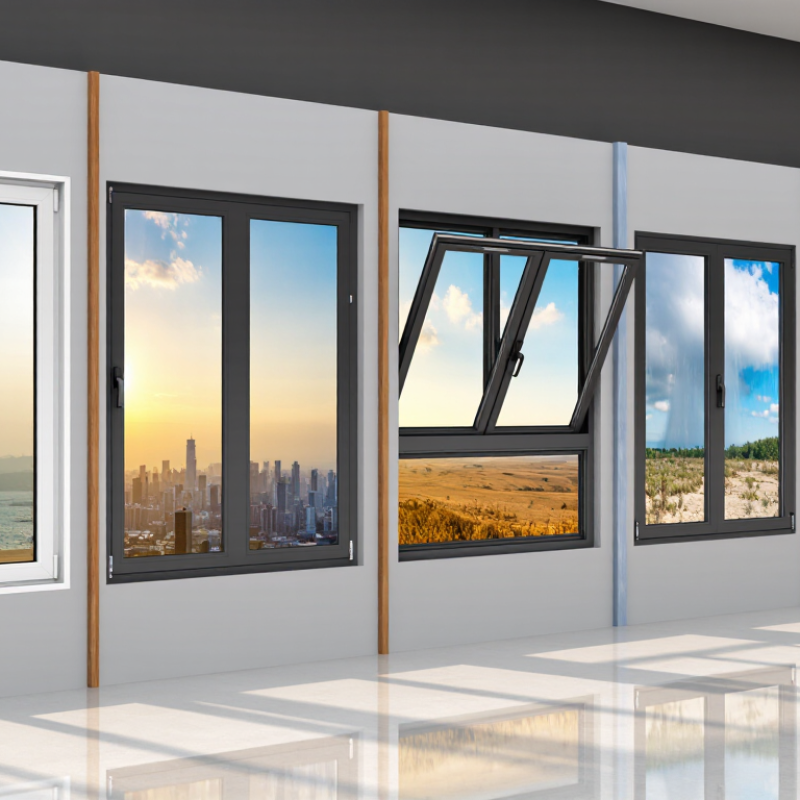
Home windows in 2026 are available in several practical types, each suited to different climates, rooms, and budgets. Casement windows use side hinges and open outward with a handle. Their wide opening supports strong ventilation and easier cleaning. They can also create reliable seals when installed accurately.
Double-hung windows slide vertically, allowing airflow through both the upper and lower sections. They suit traditional homes and rooms facing walkways. Sliding windows move horizontally and need less exterior clearance. However, their ventilation area is often smaller than casement designs.
Awning windows hinge at the top and remain useful during light rain. They work well in kitchens, bathrooms, and humid coastal areas.
Picture windows provide broad views and daylight but do not open. They often pair with smaller operating windows. Bay and bow windows extend outward, adding interior space and visual depth. Tilt-and-turn windows offer inward tilting for ventilation and full inward opening for maintenance. Their hardware can be more complex. Not every installer handles them well.
Performance depends on more than window type. Buyers should compare U-values, solar heat gain, air leakage, glazing layers, and frame materials. Local wind, rain, heat, and building codes also matter. A low-cost window may become expensive after poor installation causes drafts or water damage. There is no universal best choice. Field conditions can challenge a perfect specification. Review the opening direction, drainage details, and maintenance access with a qualified local professional before ordering.
Choosing home windows in 2026 is less about appearance and more about climate, ventilation, and daily use. Buyers should compare both window styles and frame materials before ordering. From site inspections, I have seen attractive windows perform poorly when drainage and installation are ignored.
Casement windows open outward and usually provide strong ventilation and tight sealing. Sliding windows save space, but their tracks can collect dust and reduce smooth movement. Awning windows help during light rain, while picture windows bring daylight without ventilation. Tilt-and-turn designs offer flexible cleaning and airflow, though their hardware may require careful adjustment. Small details matter.
Vinyl frames resist moisture and need limited maintenance. Aluminum frames look slim and strong, but they can transfer heat unless thermally improved. Wood provides warmth and useful insulation, yet it needs regular protection in humid or coastal areas. Fiberglass offers stability across temperature changes, although availability and repair costs vary by region. No material wins everywhere.
A polished showroom can mislead. I once favored large glass areas, but strong afternoon sun made one room uncomfortable. Buyers should check verified U-values, solar heat gain ratings, air leakage data, and local building requirements. Ask how seals, drainage paths, and replacement parts are handled. A lower purchase price may become expensive when cleaning, repainting, or difficult repairs are included.
2026 Top Types of Home Windows for Global Buyers
Window selection should follow climate before appearance. In hot, sunny regions, low-solar-gain double glazing can reduce indoor heat, especially on west-facing walls. Exterior shading remains important. Glass alone cannot defeat strong afternoon sun. The U.S. Department of Energy estimates that windows cause 25–30% of residential heating and cooling energy use. That figure makes frame quality and installation worth careful attention.
Cold climates usually benefit from low-U-factor double or triple glazing, warm-edge spacers, and insulated frames. Casement windows often seal better than sliding windows, although poor installation can erase that advantage. In humid coastal areas, corrosion-resistant hardware and controlled ventilation matter more than oversized glass. In storm-prone locations, buyers should check local wind-load requirements and impact standards. These details vary by region, so a generic “best window” list can mislead.
Building design changes the answer again. Large south-facing windows may support winter daylight in suitable northern climates, while deep overhangs can limit summer overheating. The International Energy Agency reports that buildings consume about 30% of global final energy, making passive design a practical priority. For apartments, tilt-and-turn units can improve ventilation without opening wide. For traditional homes, divided-light designs may protect character but reduce clear glazing. I would not choose windows from photographs alone. Wall orientation, shading, humidity, and installer skill deserve equal weight.
For global buyers, an energy-efficient window is more than a low U-value on a brochure. It should match the local climate, wall design, and daily habits. In cold regions, insulated frames and double or triple glazing help retain indoor heat. In hot, sunny regions, low-solar-gain glass can reduce afternoon heat near west-facing rooms. Climate changes everything. A specification that performs well in Stockholm may feel unsuitable in Singapore.
Look for low-emissivity coatings, warm-edge spacers, and tight weather seals. These features limit heat transfer and reduce cold drafts around the sash. Gas-filled insulating glass can improve thermal performance when the unit is properly sealed. Ask for independently tested U-values, solar heat gain coefficients, air-leakage results, and visible transmittance. Numbers matter, but test conditions matter too. Compare the same standards before choosing.
Frame material also deserves attention. Thermally broken metal frames resist conductive heat loss, while vinyl, timber, or composite frames may offer strong insulation. Check drainage paths, corner joints, and hardware quality because installation gaps can undermine expensive glass. A recurring site lesson is simple: excellent glazing cannot fix careless fitting. Buyers should request installation instructions, warranty terms, maintenance requirements, and replacement-part availability in their market. A small sample room can reveal glare, condensation, and opening problems before a full order. Some decisions remain compromises. Maximum insulation may reduce daylight, while large glass areas can increase cooling demand.
| Window Type | Typical Opening Method | Indicative Whole-Window U-Value* | Air-Tightness Potential | Best Climate Applications | Main Advantages | Important Limitations |
|---|---|---|---|---|---|---|
| Casement | Side-hinged sash opens outward or inward | Approximately 0.75–1.60 W/m²K | High when fitted with continuous compression seals | Cold, temperate, windy, and mixed climates | Strong ventilation control, good sealing, and large clear glass areas | Requires exterior or interior clearance; exposed hardware may need protection |
| Tilt-and-Turn | Tilts inward from the top or swings inward from the side | Approximately 0.70–1.50 W/m²K | High with multi-point locking and quality gaskets | Cold, temperate, humid, and high-security applications | Flexible ventilation, effective weather sealing, and convenient cleaning access | Usually costs more; inward opening can reduce usable interior space |
| Awning | Top-hinged sash opens outward | Approximately 0.80–1.70 W/m²K | High with compression seals | Rain-prone, humid, temperate, and warm climates | Can provide ventilation during light rain and works well above fixed glazing | Limited opening width; outward projection requires clearance |
| Fixed / Picture | Does not open | Approximately 0.55–1.30 W/m²K | Very high because there are no operable joints | All climates where ventilation is provided elsewhere | Typically the lowest heat loss, maximum daylight, and minimal maintenance | No natural ventilation or emergency egress unless combined with an opening unit |
| Horizontal Sliding | One or more sashes slide horizontally | Approximately 1.20–2.20 W/m²K | Moderate; sliding tracks can be harder to seal | Warm, mild, and space-constrained climates | No sash swing area, simple operation, and suitable for wide openings | Generally higher air leakage and lower thermal performance than hinged designs |
| Single-Hung / Double-Hung | One or two sashes slide vertically | Approximately 1.20–2.30 W/m²K | Moderate; depends on meeting-rail and track seals | Temperate and warm climates; traditional housing designs | Compact operation, familiar use, and potential for stack ventilation | More joints and tracks can increase leakage, maintenance, and cleaning effort |
| Louvered / Jalousie | Multiple slats pivot open together | Typically above 2.00 W/m²K | Low compared with sealed sash systems | Hot, naturally ventilated climates where cooling loads dominate | Excellent airflow and adjustable ventilation with a compact profile | Poor resistance to air leakage, rain, noise, and heat transfer; unsuitable for many cold climates |
| Feature | Recommended Specification or Selection Principle | Why It Matters | Climate or Design Note |
|---|---|---|---|
| Whole-Window U-Value | Compare the complete installed window, not glass-only performance; lower values reduce heat flow. | Helps reduce heating demand, interior surface condensation, and temperature discomfort. | Prioritize lower U-values in cold climates; balance with solar-gain needs in hot climates. |
| Low-E Coating | Use a coating selected for the local heating, cooling, daylight, and solar-control requirements. | Reflects long-wave heat while allowing visible light to pass through. | Different coating positions and types produce different solar and thermal results. |
| Double or Triple Glazing | Use double glazing for many temperate applications; consider triple glazing for severe cold or very low-energy homes. | Additional panes and sealed cavities can lower conductive heat transfer and improve comfort. | Triple glazing adds weight, thickness, and cost; verify frame and hardware compatibility. |
| Argon or Other Inert Gas Fill | Choose sealed insulating-glass units with documented gas-fill and quality spacer performance. | Reduces heat transfer inside the sealed cavity compared with ordinary air fill. | Long-term performance depends on edge-seal quality and correct manufacturing. |
| Solar Heat Gain Coefficient | Select a lower value for strong cooling loads and a moderate or higher value where useful winter solar gain is desired. | Controls how much solar energy enters through the glazing. | Always assess orientation, shading, latitude, and local energy requirements together. |
| Visible Transmittance | Choose sufficient visible-light transmission for daylight while avoiding excessive glare. | Affects natural lighting, visual comfort, and potential electric-light savings. | Heavily tinted or highly reflective glass may reduce daylight and alter appearance. |
| Frame Thermal Breaks | For metal frames, specify a continuous thermal break and request frame and whole-window test data. | Limits heat flow through the frame and reduces cold interior surfaces. | Frame-to-glass ratio becomes increasingly important in large windows. |
| Low-Conductivity Spacers | Consider warm-edge spacers instead of highly conductive metal spacers where available. | Improves edge-of-glass temperatures and can reduce condensation risk. | Check compatibility with the glazing seal and local temperature conditions. |
| Air Leakage and Weather Seals | Request tested air-infiltration, water-resistance, and wind-load results for the complete unit. | Reduces drafts, moisture entry, energy loss, and noise transmission. | Installation quality is as important as the product rating. |
| External Shading Compatibility | Plan for overhangs, shutters, exterior blinds, or other adjustable shading on sun-exposed elevations. | Prevents solar heat before it reaches the glass and is often more effective than interior blinds. | Especially valuable in hot climates and on east-, west-, and equator-facing façades. |
| Correct Installation | Use a level, plumb installation with continuous perimeter air sealing, drainage, and properly insulated reveals. | Prevents performance losses caused by gaps, thermal bridges, water intrusion, or frame distortion. | Obtain installation details suitable for the local wall system and moisture conditions. |
*Indicative whole-window U-value ranges are general comparison figures in W/m²K. Actual performance varies with frame material, glazing configuration, size, opening hardware, spacer, test method, climate, and installation. Lower U-values generally indicate better insulation.
Choosing the right home windows starts with climate, orientation, and daily use. Casement windows provide strong ventilation and tight closure. Sliding windows suit limited exterior space but may leak more air over time. Fixed windows offer excellent insulation where ventilation is unnecessary.
The U.S. Department of Energy estimates that windows account for 25–30% of residential heating and cooling energy use. Select double or triple glazing according to local weather, not fashion. Low-emissivity glass can reduce heat transfer, while solar heat-gain control matters in hot regions. The International Energy Agency reported that buildings used about 30% of global final energy in 2022. Better windows support wider efficiency goals. Check U-value, solar heat-gain coefficient, visible transmittance, and air-leakage ratings. Measure twice. A wrong opening size creates expensive gaps.
Installation often determines real performance. Fit the frame squarely, use a sill pan, and seal the perimeter without blocking drainage paths. Experienced installers should inspect wall conditions before ordering. Maintenance is simple but easy to neglect. Clean tracks twice yearly, keep weep holes open, and inspect gaskets for cracking. Condensation between glass panes signals failed insulating seals. Exterior condensation may be harmless, but persistent indoor moisture suggests ventilation problems. No checklist is perfect. Local building practice, imperfect measurements, and harsh weather can still expose weaknesses. The DOE also recommends checking flashing and sealants regularly, especially after storms or major temperature changes.
Typical residential frame service-life ranges and practical maintenance requirements
Fiberglass and composite frames generally provide long service lives with relatively low maintenance. Wood windows can also last for decades, but their exterior finish usually requires more frequent inspection and repainting. Aluminum and uPVC windows are widely selected for their durability, cost efficiency, and simple cleaning requirements. Actual performance depends on climate, installation quality, glass specification, ventilation, drainage, and regular maintenance.
Data shown are broad industry-standard residential ranges, not brand-specific guarantees. Service life refers to the expected functional life of a properly installed and maintained window frame.