What Are the Best Quality Windows for Home in China?

Choosing the best quality windows for home in China starts with the home’s climate, not a showroom display. A bright apartment in Shanghai faces humid summers, driving rain, and busy streets. A house in northern China may need stronger insulation against long, cold winters. One specification cannot serve every location equally well.

Building scientist Dr. Joseph Lstiburek has stated, “Buildings should be designed to dry.” That principle matters when comparing window frames, seals, and installation details. A well-made window can still leak heat or admit rain if its joints are poorly fitted. Ask about tested thermal performance, air leakage, water resistance, glass configuration, hardware, and warranty coverage. Then check whether the ratings suit your local climate and building design.

Look closely. Feel the frame. Ask how installers seal the gap between the window and wall, and how water drains from the sill. For coastal homes, corrosion-resistant hardware may be worth considering. For noisy streets, laminated or carefully selected insulating glass can help, though results depend on the whole assembly. Price alone is a weak guide. So is a polished product label.

This guide explains how to compare materials, performance ratings, manufacturers, and installation practices. It also recognizes an inconvenient truth: even a premium window can disappoint when the wrong product is chosen for the site. The best quality windows for home are not simply the most expensive; they are the ones suited to the climate, built consistently, and installed with care.

What Are the Best Quality Windows for Home in China?

What Defines a High-Quality Home Window in China?

A high-quality home window in China must do more than look slim on a showroom wall. It should limit heat transfer, seal against wind-driven rain, reduce outside noise, and operate smoothly after repeated use. The International Energy Agency’s Global Status Report for Buildings and Construction 2024 says buildings and construction account for about 32% of global energy demand and 34% of energy-related CO₂ emissions. That context makes insulation more than a comfort feature.

Check the whole window, not just the glass. Ask for tested thermal-transmittance and air-tightness results for the complete unit, including frame, sash, seals, and hardware. China’s GB/T 8478-2020 provides a national product standard for building windows and doors; buyers can ask whether test documents identify the relevant product configuration. On a rainy day, inspect drainage paths and corner joints. Open and close the sash several times. It should move without rubbing or rattling.

A low U-value alone is not enough. Poor installation can leave gaps that admit drafts, even when the window itself performs well. Match the specification to the home: a noisy street calls for stronger sound insulation, while a humid coastal area needs durable finishes and reliable drainage. I would still compare independent test reports carefully; numbers can be hard to compare when test conditions differ. The details matter.
What Defines a High-Quality Home Window in China?

Frame material affects heat transfer, but it is only one part of window performance. This chart compares representative thermal conductivity values for common frame materials; lower values indicate less heat conduction through the material itself.

Values are approximate and vary by alloy, formulation, and product design. A thermal break can improve an aluminum frame’s insulation. When choosing a complete window, also compare its whole-window U-value and certified air-leakage, water-tightness, and wind-pressure performance against local requirements.

How Do Window Frame Materials Compare?

When comparing window frames for a home in China, consider local weather as well as material. Southern homes may face humidity and heavy rain; northern homes need careful attention to heat loss. The International Energy Agency’s Buildings 2023 report estimates that buildings use about 30% of global final energy. That figure covers buildings broadly, not windows alone, but it shows why thermal performance matters.

Aluminum frames are strong and allow slim profiles, yet untreated aluminum transfers heat readily. Thermal breaks reduce that weakness, but the whole window still needs a rated U-factor. uPVC usually insulates well and needs little upkeep; check reinforcement and hardware, especially for large sashes.

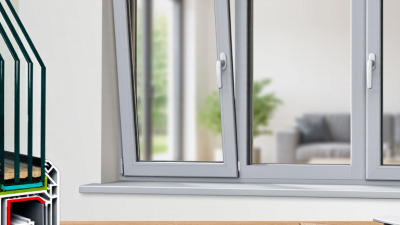
Wood offers good insulation and a warm interior finish, though damp conditions can mean more sealing and maintenance. Small detail. A frame sample beside a glass panel can reveal bulky joints or rough corners before installation.

The U.S. Department of Energy’s Energy Saver guidance also notes that frame material affects insulation and maintenance needs. Compare complete-window ratings, not material claims alone; NFRC labels report U-factor and solar heat gain coefficient. A lower U-factor generally means less heat transfer. I’d be cautious about choosing from a brochure alone. Installation gaps, drainage paths, and uneven wall openings can undermine an excellent frame. IEA, Buildings 2023; U.S. DOE, Energy Saver; NFRC.

Which Glass and Sealing Features Improve Performance?

For homes in China, glass performance should match the local climate, not just a brochure’s headline number. In colder northern regions, double glazing with a suitable Low-E coating can reduce heat loss. In hot, sunny areas, solar-control glass may help limit glare and indoor heat. Ask for the glass build-up and tested thermal data, rather than relying on a vague “insulated” label. Small details matter. A spacer between panes and a well-sealed edge help keep the insulating cavity effective. Laminated glass can also reduce injury risk if it breaks, though it does not replace secure window design.

Seals deserve equal attention. Look for continuous, flexible gaskets that compress evenly when the sash closes. A simple check is to close the window on a strip of paper; if it slides out easily, the compression may be weak. Not a full test. Water drainage paths should remain open, since even good seals cannot prevent every leak during wind-driven rain. Ask how the frame joints, corners, and installation gap are sealed. On site, uneven gaps or hardened, poorly fitted gaskets can undermine costly glass. Specifications help, but careful installation often decides whether the window performs as promised. No single glass or seal works best everywhere; local weather, orientation, and maintenance all matter.

How Should Windows Match China’s Climate and Home Design?

China’s climate changes sharply from the cold, dry north to the humid south. A window suited to Harbin may feel stuffy in Guangzhou. Start with local winter temperatures, summer humidity, wind, and rainfall—not a single national standard.

In colder regions, well-sealed frames and suitable insulating glass can reduce drafts and heat loss. Check the whole installation, too: a narrow gap around the frame can undermine good glazing. In humid southern cities, drainage, durable seals, and controlled ventilation matter. Openable sections can help clear cooking moisture, but they should fit the room’s layout and outdoor noise levels. Details matter.

Match the window to the home’s orientation and daily use. A west-facing bedroom may need exterior shading to limit late-afternoon heat; a shaded courtyard room may benefit more from daylight. In apartments, consider floor height, wind exposure, cleaning access, and whether the window opens safely. For traditional homes, frame proportions and sightlines can preserve the character of timber screens or brick façades. I would not treat the most insulating option as automatically best. It may cost more without solving the room’s real problem. Compare tested performance with local conditions, and ask an experienced installer how the frame will be sealed and drained. Some details are easy to overlook.

What Are the Best Quality Windows for Home in China? How Should Windows Match China’s Climate and Home Design?

Climate zone and examples Main home priorities Suitable window specification Design and solar-control guidance Quality checks
Severe cold
Examples: Harbin, Changchun
Limit winter heat loss, cold drafts, and interior condensation. Well-sealed insulated frames with double or triple glazing. Low-emissivity glass and warm-edge spacers can improve thermal comfort; triple glazing is especially worth considering where winters are very cold. Use appropriately sized windows and insulated coverings where useful. Keep the indoor sill and frame details insulated to reduce cold surfaces. Check complete-window thermal performance, airtight installation, durable weather seals, and properly insulated perimeter joints.
Cold
Examples: Beijing, Shenyang
Balance winter insulation with summer heat and strong seasonal temperature changes. Insulated frames with double glazing are a common starting point. Consider low-emissivity glass according to orientation and the home’s heating and cooling needs. External shading on sun-exposed windows can reduce summer solar gain. Design operable sections for safe, convenient ventilation. Prioritize a well-fitted frame, reliable hardware, airtight seals, and glazing selected for the actual façade orientation.
Hot summer, cold winter
Examples: Shanghai, Nanjing, Wuhan, Chengdu
Provide useful insulation in winter while limiting summer overheating and managing humid conditions. Insulated frames and double glazing are generally suitable. Choose glass with a balance of thermal insulation and solar control; the best balance depends on orientation and shading. Plan exterior shading for east- and west-facing windows, where low-angle sun can be difficult to block. Include operable windows for natural ventilation when outdoor conditions are suitable. Check air and water sealing, drainage paths, condensation resistance, and compatibility with local heating and cooling systems.
Hot summer, warm winter
Examples: Guangzhou, Shenzhen, Xiamen
Reduce solar heat gain, resist wind-driven rain, and support ventilation in hot, humid weather. Use durable, corrosion-resistant hardware and frames suited to local exposure. Solar-control glazing may help on strongly sun-exposed façades; select it without unnecessarily reducing daylight. External overhangs, louvers, or other exterior shading can be more effective than interior curtains against direct sun. Provide secure ventilation while accounting for rain and insects. Pay close attention to water tightness, drainage, corrosion resistance, secure locking, and installation quality in exposed locations.
Coastal or typhoon-exposed locations
Examples: parts of the southeast coast
Withstand wind-driven rain and exposure while maintaining safe, dependable operation. Select a complete window system designed and tested for the project’s wind and exposure conditions; frame material alone does not determine performance. Coordinate opening size, opening direction, and ventilation strategy with the building design. Use appropriate protection and secure hardware where required. Confirm project-specific wind-load, water-tightness, and air-tightness requirements, along with proper anchoring and perimeter sealing.

Selection note: Climate zones are broad guides, not substitutes for project design. Actual requirements depend on local codes, building height and exposure, façade orientation, shading, noise, budget, and installation quality. Compare tested performance for the complete window assembly, not just the frame or glass.

How Can Buyers Check Window Quality and Installation Standards?

What Are the Best Quality Windows for Home in China?

Buyers can judge window quality by checking materials, movement, and the documents behind the product. Ask for written details on frame material, glass layers, hardware, and applicable product standards. Compare these details with the order, not just a showroom label. Check the corners. Frame joints should look even, without gaps or rough sealant. Open and close each window several times; it should move smoothly and lock securely.

Installation matters just as much as the window itself. Before work begins, confirm how the installer will measure the opening, seal the perimeter, and fix the frame. During installation, look for consistent gaps and suitable sealing materials, not just a tidy finish. Afterward, check that sashes do not scrape, locks engage, and water does not collect along the sill. Request written installation and warranty terms. A neat showroom sample can still hide weak site work, so appearance alone is not proof. I would also allow time for adjustments; that step is easy to overlook.

Tips: Take photos before the trim is covered. Keep the product specifications and installation record together. If a window feels stiff or a seal looks uneven, ask for a correction before accepting the work. Even careful checks cannot reveal every hidden defect.